
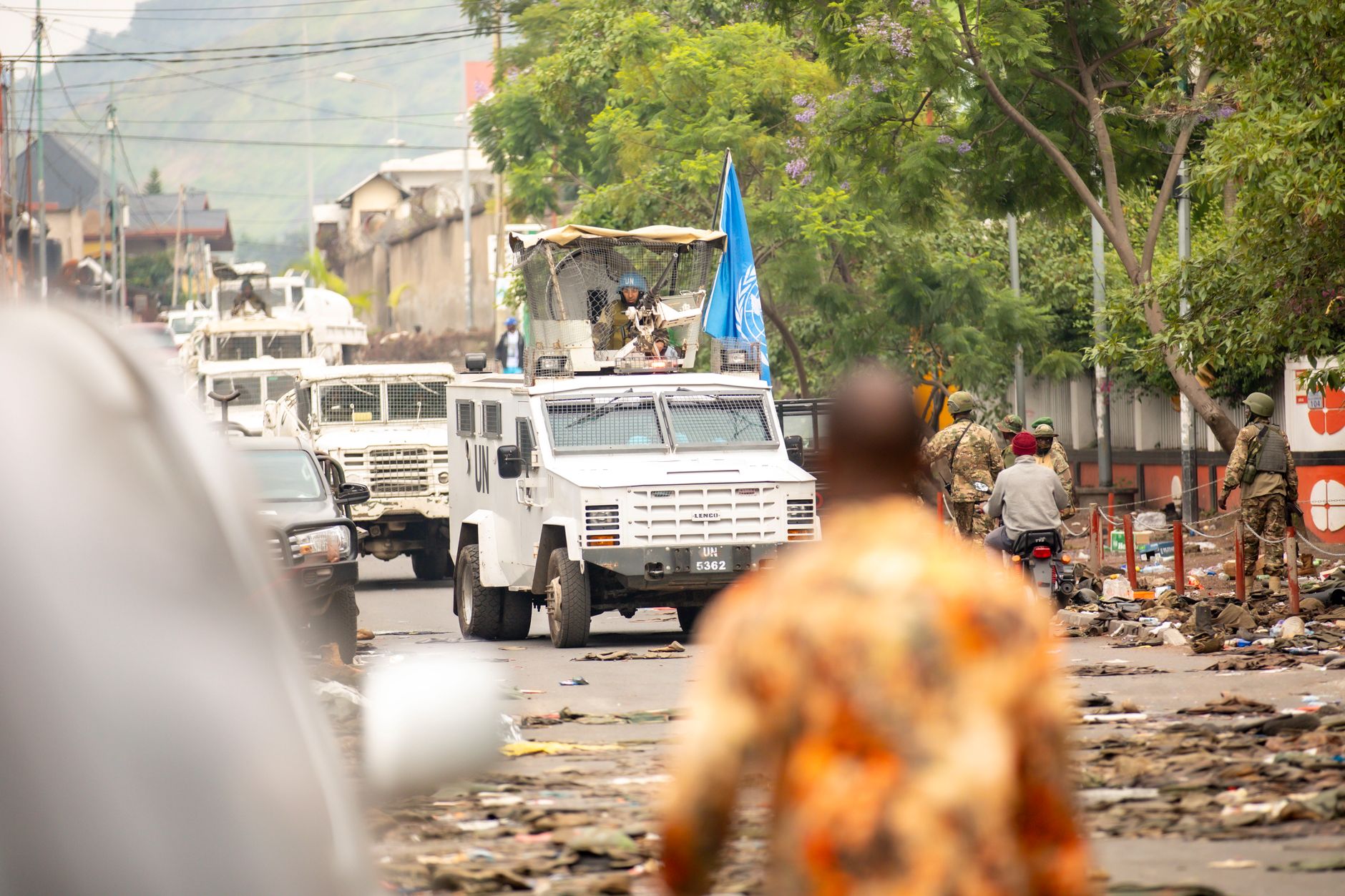
It is widely respected but greatly undermined by Trump, America and that is the World Food Programme. The difficulty they have in feeding the poor, destitute and refugees is an argument of budgets. It is not an identity that the United Nations wants; it is a factor in the arsenal of the international community reaching out to its membership and nations, providing the funds to disburse to the agencies on the ground. But it is facing a crisis, a terrible crisis that has been magnified by the wars taking place across the world.
It may not seem a credible argument to the average Westerner who sits comfortably and worries about the next generation of AI, but the Rohingya in Bangladesh have seen a third of their funding disappear. The Sudanese refugees in Chad have less help than they have ever received and the refugee in Gaza is on a strict diet that keeps the population depenedent on all the UN agencies. But it is the invisible world that would not exist if there was no agency and that is nations like Somalia, the Horn of Africa and right through to the Congo. It is a necessity, but there are voices that argue it is to large, to unwieldy and to bureaucratic.
The arguments of what the United Nations is and what it wants to be in the future is an argument that is in stasis, the last leader has retired and a voice is being looked for to lead a third world through the difficulties of a world that has generally turned its back on the agency. There is an argument that this would never have happened if it had never been undermined by big boy politics, but that is the crux of the argument, big world or big boy politics is just a minority in millions that provides seventy percent of the funding.
Trump’s disdain for the organisation or should we argue for all organisations, is as much to do with the projection of America and where it is today. The idea of a climate crisis is to much for the president and the argument of who or what has caused it is a contentious argument for both the third world and the US. it is not so much the argument of identity, but more an argument of a state throwing its weight around rather than the world coming to an agreement.
The argument is that the rich world determined by arguments and ideology leaves the vast majority of the world behind. The actualities of the argument is identity and a “tin arsed nation state” that has a massive population determines the narrative, so it is argued. The security council, an argument of who or what has the largest economies in the world spells out the identity of the direction the world will take. But the argument is how an argument is formatted and the ideas, diverse range of identities and spin will be calibrated to move a motion in a world of different voices.
Identity matters, the argument of the nation state determining its right to its own international standing is as much an argument of where a nation sits on the international argument. It is amazing that the identity of states affected by the Iran war is a black mark on international markets, but the argument is very much an identity of what can you do for us. This idea is very much a Marxist argument of how and where the organisation sits among the poorer states, The idea that states are determined by their political settings distinguishes between rich and poor.
The scope of the argument is dependent on so many factors, but the number one argument is trade and what the nation state brings and what it can spend on its own to meet the commitments of international organizations. But it is the UN we are talking about and the voting, politicking and comfortable setting of New York grandstands the politicking that takes place. The argument of Gaza and the rubble has moved the question on how and what the world views as acceptable. The movement of food and medical care in the strip was formatted by UNRWA (United Nation Works and Relief Agency).
Israel always argued that UNRWA had been infiltrated by the HAMAS government, so the idea of an independent agency involved in providing relief was negated by the Israeli state’s view of Gaza. The trucks, food distribution points and warehouses became targets and the imposition of UNRWA being a target, was and is one of the cruellist arguments of the Israeli state. The targeting of UNRWA led to mass starvation, malnutrition and deaths.
But it is countries like Yemen where big world politics is caught up in a conflict that has no answers. For ten years the Houthis have been in control of the capital Sanna and for twenty years the country has been in a state of flux. Initially a regional conflict with regional actors trying to manage an outcome, today the battle for Yemen is about the worlds resources and choke points.
It is not so much about Yemen’s resources or the ability of Yemen to manage arguments of regional political arguments, it is more about the strategy of geopolitics and how and where the worlds resources are allowed to be shared. In other words the argument is about choke holds and like the Strait of Hormuz, the choke point is the Bab al Mendab strait, very similar to Hormuz. But though the conflict rages and the choke point has been relieved, the United Nations finds itself feeding eight million people in an area that has not had peace for thirty years.
It is a little known factor that while the geopolitical argument of the worlds resources are tied up by the Houthis managing and running the country, it itself is reliant on the resources of the world to feed its own citizens. But what if the world turned its back on Yemen, that has been tried and it made no difference to governance, it just led to mass starvation, in much the same way that the war in Sudan has not stopped because of a refugee catastrophe.
The United Nations and its agencies are there as a stop gap until situations are stabilized and then investment can come into a nation that has been at war. But the argument becomes a question of why these nations are able to continue wars when populations are starving, destitute, unemployed and wholly reliant on handouts. It is a question of geopolitics, the war in Sudan has really been raging for fifty years, it has been a question of geostrategic alignment more than anything else and once again it is a movement from the cold war to arguments of a realization that the borders, ethnic identity and religion are arguments that have become central to identity.
A small war in Sudan has broken the country into north and south, oil has been traded and interference in both states has led to perpetual revolution. It is as much as the answer to the problem of independence for one ethnic group creates another counter insurgency. The Janjaweed is a point in contention, the argument of how and in what ways the Sudanese state could fight a war of insurgency, led to the splitting up of the country. The Janjaweed became the Rapid Support Force, a self funded paramilitary that has raped, brutalized and murdered its way through Darfur.
But once again, though the RSF are resource rich and capable of creating an economy to fight disease, malnutrition and help the refugees, because of ethnic difference, they have slaughtered, let the people starve and degraded the populas that they regard as second class and let the United Nations to bring food into the region.
So what hope is there for the United Nations, from the Rohinga in Myanmar to the Congolese, it seems to act as a stop gap in wars to provide food, education and jobs. A state without a state, a country without resources other than the world providing the ability for the United Nations to act as a soundboard for the nations crying wolf tears. Nothing quite answers the question of where the organization goes from here. It is reliant on the resources of the richer nations and is unable to fund, manage the diplomacy and aid necessary to manage conflicts determined to use their resources to feed refugees.
The question has to a degree been answered by the last leader of the UN, Perez de Cuellar, it is a matter of climate change, and as the resources become more contested over, the need for the UN becomes more important and yet the argument and identity of the UN is under attack by the richer countries. It is not so much a problem for the UN in the sense that it is large enough to withstand the attacks, it is budget constraints and as the climate crisis takes hold, wars for the resources of states will become central to any outcome in the future.


Leave a comment