
Trump’s push for a twenty-first-century Yalta, where the world could be carved up by the big three, turned out to be theoretically ludicrous, and a game of Go in its infant form.
Europe and Eurasia to Russia, Asia to China, and the Americas to the US were his sell; the world put its hands up and questioned the sanity of the U.S. President. But it was the love affair that Trump seems to have for Putin (“Who is that? It is my friend”) that distinguished the weakness of his argument. If you look at his argument on economics and demographics, the argument is that the “custard flop buffoon” has been misinformed and has mistaken Russia as a leading power economically and physically, with its only attribute—the nuclear weapons it holds. And that is a question that is not altogether a true reflection of power, but mostly Armageddon.
It is not a question of when but if the US will change its arguments in the world that divorces the states that have been allied to its projection as a power. Sir John Sawer sees Britain’s contribution to US intelligence as only 10 percent. But of course, this is a minuscule amount; but when intelligence is tainted by the hand of a politician—rewritten as a discourse in political ambition—you end up with the mess that is Iran, the Houthis, Hamas, and Hezbollah.
The question is when intelligence is real rather than a mocked discourse in disinformation. The politicisation of intelligence is nothing new—phrases plagiarized from authors such as “Clear and Present Danger” ended up on the world stage. Sexing up dossiers was a phrase used by a British prime minister to start a war in the Middle East, but ultimately the bastardization of intelligence for political, fiscal, or even an argument of sanctions has been part of projected argument for centuries.
Arguments of identity politics are part of every nation’s identity in intelligence gathering. But the idea of who or what is projected challenges everyone, and unless a nation has a robust press, the diminishing returns of an ideology cossetted in political discourse doesn’t just challenge the ideologue but also the state’s own population. MAGA seems to be an argument that isolates the US from world politics, but at the same time, the ideology behind the argument is very similar to Britain’s own Brexit argument—an argument of identity politics that projects an expression of past identity.
Back to the custard flop old man, with his identity tied to his ego, unmatched by anything that ties him to an ideology—just self-enrichment and self-aggrandizement. Trump mistook Netanyahu’s ambition and misinterpreted intelligence wrapped in a report designed to play to his vanity as a true assessment of the Iranian regime. Rather than a calculus that had no bearing on fact, but a geo-strategic argument that had been dusted off and rewritten for the consumption of this US president.
Last week, a journalist asked Trump, “What Pete wants….” “Pete, who?” Hesketh came the reply… “He wants to bomb the hell out of the Iranians,” was Trump’s reply… There were no follow-up questions; there were no questions about intelligence, and there were no questions about why….Hesketh had calculated that further bombing would end the regime, state, and theocracy.
It is really just assumptions—enormous assumptions that help the analysis realize the ridiculousness of the intelligence that empowered Netanyahu’s dodgy dossier. It was not the only intelligence failure that followed the Israeli prime minister. There are still questions about Hamas’s attack on the kibbutzim in southern Israel following the prime minister’s refusal to accept responsibility, which is tied to political spin, delaying tactics, and factors favoring the settlements on the West Bank over southern Israel.
A retrospective view of intelligence finds that reports by the soldiers, intelligence analysts, and physical intelligence all documented the Hamas attack before it could take place, but were ignored by politicians. A massive failure and continued failures was only offset by the success of pagers exploding in the hands of Hizbollah. This seemed to be the catalyst for the success of Israeli intelligence and for the attack on the Iranian leadership, which is where we are today, except the Strait of Hormuz and the Bab al-Mandab straits are closed… Causing massive inflation, high oil prices, shipping losses, and tariffs on every ton of oil shipped through the straits.
In much the same way that Trump fed off the idea of an easy win in the Gulf, Putin listened to the same arguments he pushed, which has led to the destruction of half his army. If the argument is a calculation, then the vanity of the so-called commander in chief—dodgy dossiers are fed to the leaders who only hear an assessment that fits their projected argument.
That same argument, like all mistaken assumptions, then places blame on the intelligence providers. But all intelligence is fallible if underwritten by a doctrine determined by presidential decree, argument, or belief. Saudis in Yemen suffered from an assumption that they had the military ability to contain the Houthis, which of course turned out to be a false assumption and led to their own exports being locked out of world markets. But the intelligence of the Houthis’ ability was well documented, and rather than accept a détente as the UAE wanted, the Saudis pushed back and were defeated.
It is how intelligence is interpreted by politicians that leads to identity politics, and how politicians identify, push, and spin intelligence to meet their own arguments. But the war in the Middle East was a projection of an argument that ended with John B. Judis comparing Trump to Alexander, Julius Caesar, and Napoleon. But of all those names, there is no resemblance—just a miscalculation by a president who fell into the belief that regime change alone could be attained without boots on the ground, and then what….. Just a vanity project that went awfully wrong. As for Yalta, it took the world 45 years to tidy up the damage Stalin inflicted on the people of Russia, Eastern Europe, and the rest of the world. Yalta is not a proud accomplishment other than a projection of power by two large nations that dominated the world for forty-five years.
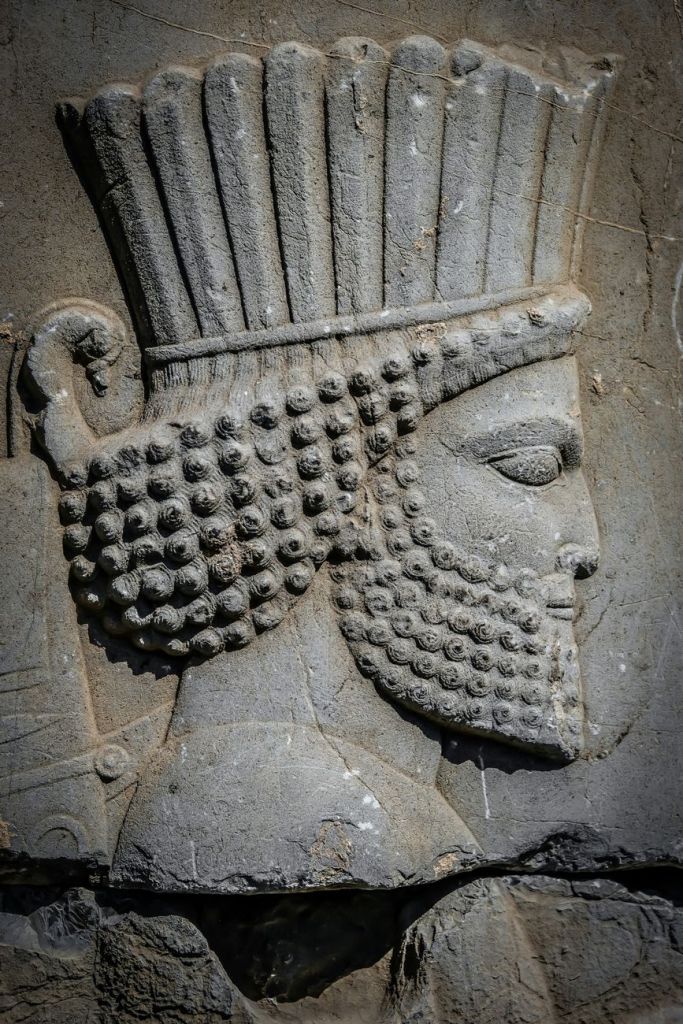
Trump is more Xerxes than any other character in history—an ego fed on an imperialist argument of absolutes rather than one fed on accurate intelligence.


Leave a Reply