It is Friday…. there is something lacking in the narrative in the Islamic side of the Iranian state that has been omnipresent throughout the fifty years of theocratic governance – and that is the guidance delivered by the supreme leader in a time of crisis. Like his father, Motjaba’s ascension to becoming the supreme leader- was and is more a question of who has the real power in the state and who is controlling the theocratic narrative?
It is not so much whether the supreme leader is alive, badly injured or dead; but it is the hole in the theocratic narrative that doesn’t make sense to an outside observer of the theocracy. The bristling pieces read out on Iranian television by a newscaster really does not answer any of the questions of who is controlling the theocratic message to the faithful, and questions of whether the messages were scripted by the supreme leader, or a narrative scripted by Mohsen Rezai? (who I will get to later).
Yes, Motjaba like his father is not highly regarded in theocratic circles and his legitimacy is very much a question that has not been answered by a theocratic core who would have preferred a more modernising voice and not a succession. Shaliram Khodi, wrote on 11th March, “the legitimacy of Mojtaba Khamenei rest[s] on […] institutional continuity and the IRGC.” But that is very much a question that is vexing outside observers of the theocratic elite and whether the voice of the supreme leader has any weight in the direction of the state, and if power has moved from the theocracy to a radical wing of the IRGC, who are controlling the scripted statements by an incapacitated Khamenei. (Conjecture is that the speeches have been scripted by Mohsen Rezai’’s own interpretation of the direction he wants the state to take).
This past week has seen a fragmentation of the Iranian states capabilities to manage the narrative of the ‘Third Gulf War’ for the first time. The image the IRGC pushed last Friday with a military parade and the supreme leaders message underpinning a more radical argument, dismissed the states involvement in the negotiations in Islamabad, was in itself mystifying. On the one hand it was a missed opportunity for the state to control the long term narrative the state could have used to manage its exit from the ‘Third Gulf War’, and on the other the talks in Islamabad could have underpinned the theocratic elites position in the state and among the vast majority of Iranians who want an end to this war.
Theoretically, this moves the question onto whether there is a disconnect between the theocracy, IRGC and the vast majority of Iranians. An article in New Lines authored by Sami Zaibi, who interviewed Ahmed al Wandi, spokesman for the al-Nasr party in Iraq, said that “the Iranian leaders who were killed were the moderate ones […] take former leader Laranjani, he studied philosophy and admired Kant. His replacement is a general. The new leadership consists of hardliners with whom dialogue is nearly impossible, even for us.”
The opening of Hormuz last Sunday was a lifeline to the gulf and the Iranian state. It was meant to act as a catalyst for the parliamentarians and negotiators to control the narrative of the Islamic Republic and their willingness to continue the peace talks that had taken place in Islamabad. The statements that Iran found it difficult to trust the US team after Geneva, was also about the internal politics in Iran. But Trump’s argument for ‘Maximum Pressure’, his statements and posturing diminished the ability of Egypt, Turkey and Pakistan to bring the Iranian team back to Islamabad. Dominic Tierney in an article in Foreign Affairs argued, it is very much a case of “the optics, dynamics and political spin that slews the narrative.”
As said in one of my previous articles, Ali Khamenei had taken a year zero approach to the coming war, the government hit out at those closest to the state, and Iran’s zero gains approach isolated the state from the countries that could have made a difference in the states ability today to put pressure on Trump.
For all the plans, arguments and posturing of Trump, the attempts by the Iranian’s to open a dialogue in the first month of the war was derided by Trump for a maximalist approach, his belief that targeted attacks on the IRGC and leaders of the state could achieve regime change through air strikes alone, proved false once the objectives of the US and Israeli military were met. Trump doubled down on his approach and threatened to “bomb the Iranians back to the stone age.” Diplomacy happened and talks took place in Islamabad.
Since the talks there has been an uneasy ceasefire, but as Andrew England put it in the Financial Times, the “US and Iran are locked in a costly battle of wills and a scrappy ceasefire that may put a lid on a full blown war […] without ever stopping hostilities, or easing the energy crisis.” From an altruistic point of view, it is easy to agree with Andrew England, but it is a bit more complicated than Asia and Africa worried about fuel, food, fertiliser, cooking oil or even famine”, it is about two nations locked in a dynamic of projected power determining the theocratic, political and military costs that are shaping the conclusion of the war in both the US and Iran .
In many ways it is the domestic, economic and political pressure in Iran and the United States that has created a political blockage in both states to control the narrative that the talks will take. Though Trump has created a mandate for his team to negotiate in Islamabad, the blockade of Iranian ships and his ‘maximalist’ argument have been met with reservation among the electorate. But the economic blockade is a far more popular strategy than bombing “Iran back to the stone age”, With Trump’s eye on his popularity among the electorate, (an Ipsos poll mid-April found that only 24% of Americans agreed with the US military action, however an Ipsos poll of Republican voters found that 55% of respondents supported the war), means Trump needs to find a narrative that he can project to the electorate in the autumn.
But there have also been deep splits in Trump’s MAGA support base, which has an abhorrence to the war. Political commentators and other voices in the MAGA movement who once supported Trump have distanced themselves from the war and argued Trump had betrayed his election promise of ‘no more wars.’ Marjorie Taylor-Green, Joe Rogan and Tucker Carlson have all spoken out against the president and the war in the gulf, and distanced themselves from the president, because as Tucker put it,,, “this is Israel’s war”.
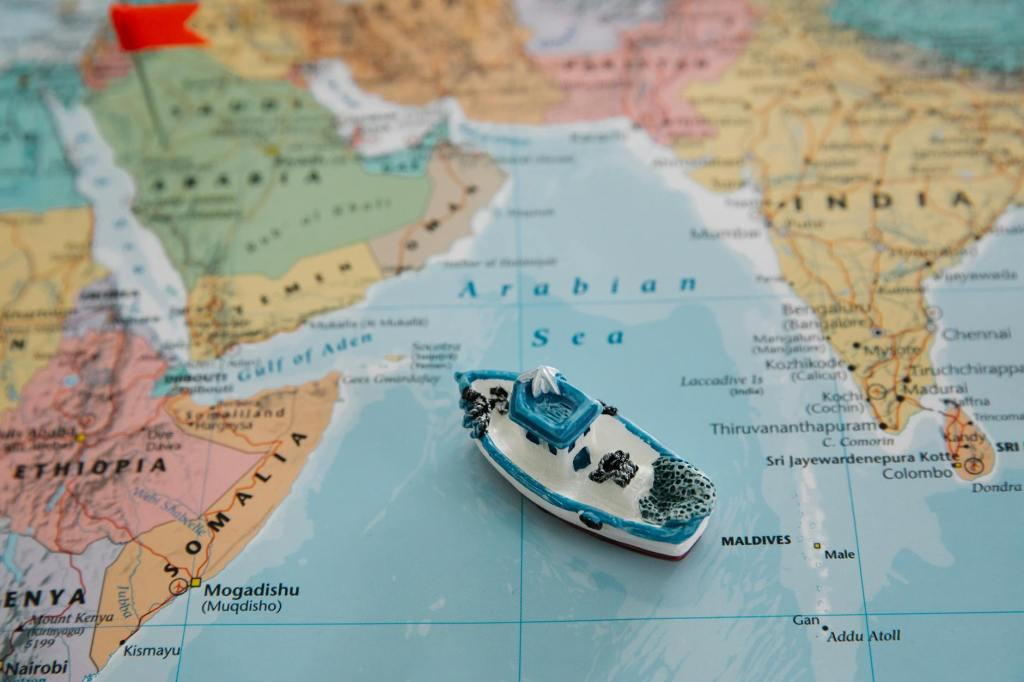
Though the narrative on both sides makes it difficult to compromise and Iran’s unwillingness to trust the American’s, the ever expanding ceasefire does not solve the overriding concern of the states in the gulf and world markets. The complexities of the geopolitical argument have not been missed by those in the gulf, and world markets dependent on the oil, gas and fertilisers that come through the Strait of Hormuz, which is blocked by both Iran and the US ,is also questioning the geopolitical narrative in the gulf and the world?
Helen Thompson in her paper “Disorder” questions whether the US is geo-strategically playing a longer game with the closure of the Strait of Hormuz. In her paper she questions whether the closure of the strait is not an “unintended consequence of a campaign against Iran, but part of a strategic calculus aimed at China.” Her argument spans the emergence of China as an industrial power dependent on “energy needs”that ties [China’s economy] to an opened Strait of Hormuz, and the states in the gulf supplying China with the energy it needs.
China’s soft power approach to the Middle East has not changed since the conflict began, the agreement China brokered between Saudi Arabia and Iran in 2025, was heralded a diplomatic success for China Whether China is now placing pressure on Iran is very much hidden in the soft power route the state takes in its diplomacy, but with the new blockade by the US Navy it means that the oil that had continued to flow from Iran to China throughout the war has now stopped. Whether the Chinese state will want to be involved in what the Chinese state terms “America’s war”, is diplomatically sensitive for Xi Jinping who will meet Trump on a state visit to Beijing in May.
Ninety percent of Iran’s oil is exported to China, and the blockade is having a dramatic effect on the Iranian economy. Lyse Doucet a BBC correspondent in Tehran, speaking to a woman on the street who asked not to be identified said “people are paying three times the price for a loaf of bread. People are going through hell, just to pay for bread.” Karim Sanjpour in an FP podcast yesterday, believes there is a disconnect between the IRGC and [economists running the economy] who know the regime desperately needs cash, […] but [among the IRGC] there is consensus that the state needs nuclear weapons [to safeguard the state].”
But there are so many arguments in Iran, as said in a previous article the Iranian state is fractured, the voices coming from the state are not necessarily aligned with the new elite, and questions of the viability of the state and the new elites management of the narrative and direction of the state, are the same variables that challenged the governance of the state in January, March and April – the depreciation of the currency, demonstrations against the ruling elite, Ayatollah Ali Khamenei’s distrust of the talks in Geneva and the fragility of the states economy will all be critical variables in the Islamic Republics survival.
But it is Ayatollah Khamenie and a hardline elite that is dictating whether the Islamic Republic will sit and negotiate in another round of talks, is also a question of whether Ayatollah Khamenie controls the narrative nationally and internationally, and whether he can deliver guidance to the faithful is a question that is ethereal, especially if the narrative of the theocracy is being controlled by Mohsen Rezai’s own vision of the future of the state.
Like anything in world politics and diplomacy – there are movements that happen when you end a piece that you are writing. Aragchi the Iranian foreign minister is going to Islamabad for exploratory talks, and the Americans are sending Witkoff and Kerchner who would not be my first choice after the failure of Geneva, but it is a start.


Leave a Reply