
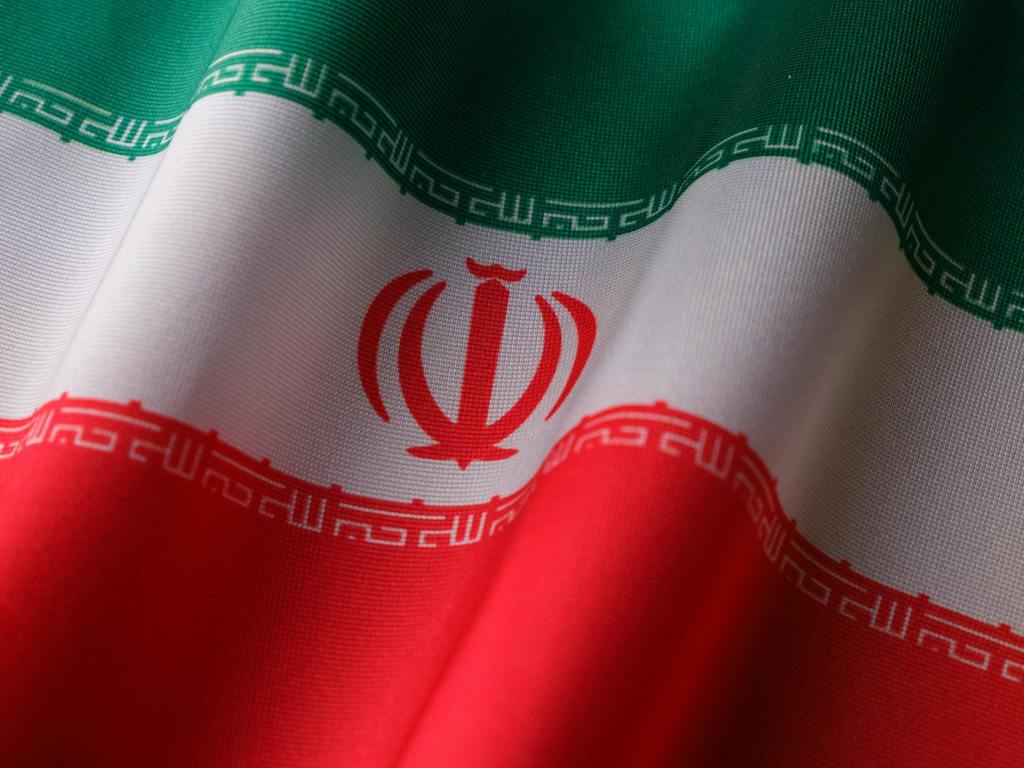
Apart from the decision to think Israel was bluffing, the Iranians have made a catalogue of mistakes that have made its decisions to fight a war impossible. The concept that Ayatollah khamanei is threatening the United States falls into the bracket of not registering the reality of the states weakness. Trump may buy into the threats by the Iranian state, but on the ground the arguments are more decisive, the Iranian have lost their airspace, they are firing rockets into the Israeli state, which are untargetted and have failed to challenge Israels political elite.
The geo-political field has changed and Iran has not made any progress in realising that the influence it once had in the Middle East has waned. Since its reproachment with the Saudi’s it has to realise that it has been handed a detente in the battle for the Middle East and it is this realisation that on the one hand there has been reproachment and on the other – the forces it had built in the past thirty years have lost ground. Hezbollah has been defeated and whether the strategists have been delivering quality appraisals, political and miltary changes to its proxies and the state that it could once relie on, has challenged Iran’s ability to counter the Israeli states agression.
The advantages that Iran had before Hamas attacked Israel have gone. The state that had most influence within the Iranian sphere of influence -Syria- has a new government, which is not aligned with the Iranians in any shape or form. States such as Jordan are not interested in a war with Israel and Saudia Arabia a largely Sunni nation is in the middle of transitioning its relationship with the Iranian state.
Iran has to realise it is alone and though the Ayatollah Khamenei will argue that the state has the will to fight the imperialists, it is unlikely that it has the capabilities, Iran has been sanctioned for the past ten years, which leaves the state militarilly and economically weak. The failure of Iran to find a diplomatic route to peace talks, has handicapped the state and its apparatus to manage this conflict in a more peaceful way.
If Iran uses force to close the Strait of Hormuz, it is likely that the state would be drawn into a more formidable war. Trade would be handicapped and the states economic outlook would continue to spiral while the conflict widens, the state would be forced to suspend its economic outlook for as long as the war. But it is a question if Iran understands that the West has learnt from its adventure in Iraq and whether the West could fulfil a military brief, which isolated Iran, is very much in the making.
The question whether the proxy forces that Iran has accumalated over the past twenty years would willingly enter a war may be considered dangerous as the lessons learnt after the assassination of Solimani and the commander who ordered the attack on the US army base in Jordan, means that the proxies in Iraq and elsewhere would need to tread very carefully. If anything the world has enhanced the security and intelligence apparatus and the blindness that affected the west in Iraq has been underpinned by new technology.
Whether Iran will capitulate its nuclear enrichment program is no longer a question. The United States has opened the door to further negotiations, which is an aspect that the Iranians need to consider carefully. Iran is fighting a war that makes very little sense other than to empower the state with a weapon that would lead to an arms race in the region. There is a lack of effectiveness in the enriched uranium that Iran holds, Iran is in the position of Saddam Hussein before the Gulf War. The Iranian state is blocked, it cannot move into a position that would give it a technical advantage in this existential war.
Whether there is an answer to the argument that the war with Israel is anything other than existential is being reflected by the Israelis military advantage. The continual bombing of Iran and its structures of power challenges the state in its security. The factors that eliminated arguments is that the regime is acting at speed to close down dissent, whether that is historical or in the present, the state are forcing their citizens to tread carefully.
Whatever the state argues, the apparatus and foundations have been laid in the last thirty years have begun to creak, in much the same way as the Baathists in Iraq, when weakened by sanctions and no-fly-zones that were put in place by the Western powers. Iran has pushed its arguments to the core of the states propaganda, however, its proxie (Hezbollah) did fight a war with Israel and was quickly outmanouvered by an Israeli state that dismembered the leadership, the commanders and 80 percent of the missiles in its arsenal.
The strategy Israel is using, is tried and tested in Lebanon, it is weakening the structures that enable the Iranian regime to manage the day to day running of the state. However, the elements that make up the structures that challenges most Iranians are the security apparatus and though cities like Tehran have been emptied of their population, the paranoia running through the security apparatus may in turn become an uncontrollable element in the future of the state.
The closure of the internet in Iran means the of media coverage is blacked out in the state. The security forces have closed the door to intelligence getting out of the Iranian state, but news is getting out as very brave citizens provided images and recordings that have been widely seen in international markets. The continuation of the states security apparatus to try and close off dissent is feeding into the populations fears for the future and what the government will do.
Though this is an existential war, there is a realisation that the israelis are dependent on the Americans continual support for the IDF. But the reality is that Trump has given notice that he is looking for movement from the Iranians, and though he has said his decision will come in the next two weeks there is a realisation that the Iranian government will have to tread carefully if they are going to get out intact.
The time frame that Trump has given Iran, is also a realisation that the arguments that the Iranians make in Geneva in the coming days with the Europeans will impact how the US president reacts. But without complying to the Europeans the Iranians maybe in a deeper hole than they can dig themselves out. The Europeans are going to ask that Iran complies with the IAEA (International Atomic Energy Agency) and opens all its plants enriching uranium to the agency.
The similarities to the Iraq conflict are extraordinary, and though the Iraqi’s refused to comply to the alliances demands, Iran would have learnt from the mistakes made by Saddam Hussein’s government. If the intransegence of Ayatollah Khamanei continues and his defiance is absolute, then the Iranian state is very much in the same hole as Saddam Hussein was during the blocking of the state by the west.
There is no second guessing Trump and though his brief is not to fight a war, the intransegence of Netanyahu to continue this conflict for as long as it will take places pressure on the president as well as the administration. Washington is split, MAGA don’t want America to get into any more wars, but Senators and Congressman are arguing both for and against joining the Israelis in the war. It is the question of Fordo, the underground research site that has focussed the conversations of the politicians. But it is a question of whether the Iranians threats of retalliation come to fruition if the Iranian regime has that much of a voice.
Iran is in a dangerous position, the ideology of the mullahs to challenge the Great Satan is coming to a head, but the unpredictability of the situation is also an argument of whether Trump pushes the United States into another conflict. Whether the Iranian government is forced into revealing its centrafuges to IAEA is really an option, which is dependent on Ayatollah Khamenei, but if the Iranian government, especially President Pezeshkian can take the lead, then maybe an element of sense can bring the Iranians to the negotiating table.
 Current Affairs
Leave a comment