
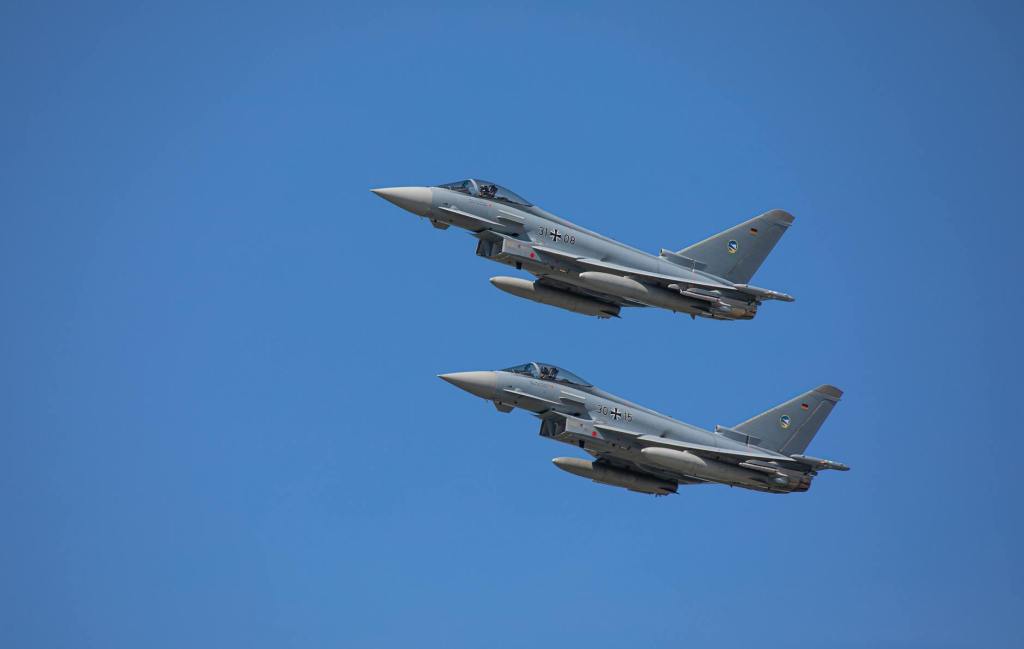
Europe is in a bind, the idea that Trump is controlling the war in Ukraine has come to a head. Britain, France and Germany have come to agreements on how European defence forces will navigate the very difficult waters of a Europe without the United States. But one of their arguments was to integrate Türkiye into this force, which outside Ukraine and the US has the largest army serving in NATO. The concept that Türkiye would accept a position within the European defence force without being a member of the EU seemed to be an argument that found its way into the in-tray of those arguing for a more combined and powerful European army.
Erdogan who had all but given up on European candidacy has circumvented the arguments of what a European army would look like and the fragmented arguments of whether Türkiye should be part of a European defence force. Türkiye has had its problems with NATO, and in 2017 when the Turkish state opted for the cheaper S400s from Russia to manage its domestic defence, had led to the state being thrown out of the F35 programme. Türkiye is considered a significant member of NATO and though it has been in the shadow of the war in Ukraine, it has a significant relationship with both Europe and Russia, which gives it the opportunity of being seen as an honest broker in the conflict in Ukraine.
The initial Russia – Ukraine peace talks in 2022, held in Turkey seemed a good jumping off point for the Ukrainian-Russian talks to resume in Istanbul in 2025. The failure of the March 2022 talks were Russia’s insistence for guarantees that neither NATO countries or the Ukrainians were willing to give. The idea that Russia wanted to control the outcome of the Ukrainian states political direction was a step to far for both President Biden, President Zelensky and the European powers. The failure of the talks in Turkey were also a realisation that Russia would continue to wage war in Ukraine and NATO members would support the defence of Ukraine. But Trump won the election in 2024, and his campaign speech promised an end to the war. Trump has alarmed NATO and EU states with his rhetoric, his failure to support the Ukrainian side of the argument, led to the charade that took place in the White House, where Trump had a very different objective to Zelensky, Ukraine’s President.
However, talks are taking place in Saudia Arabia and the United States is finding the goal posts being moved by Russia continually, which has led to Ukraine regaining aid and intelligence but not a foot in the door of the negotiations. The movement to a space dominated by US rapprochement in the talks has enabled the negotiators to hear the concerns of one side over the other. The reality is that the talks are very much in their infancy and are exploring the concerns that Russia has rather than an outcome that is negotiated. Though there was meant to be a cessation of bombing of each states infrastructure, the reality on the ground is that this has not stopped the bombing of Ukraine, and it is very much a one way argument at the moment even though the Ukrainians are present in Saudia Arabia, they are not part of the negotiations.
In many ways Europe is still a significant voice in Ukraine and in the future of the state. Though the negotiations are taking place in Saudi Arabia, the realisation that Europe will have a significant part to play in the future of Ukraine is a realisation that the United States are playing a hand without significant input from the states that are guaranteeing Ukrainian sovereignty. Plans have been put forward by the United Kingdom and France to act as backstops to any peace plan, the Russian argument was very much against the backstop. But the arguments coming from Europe are empowering the European states to manage a more aggressive stance both politically, militarily and defensively.
Germany is stepping up with the long awaited Zeitenweld plan, and military spending will increase significantly as Germany has approved the Euro1 trillion for both the economy and military. Britain has reached it commitment on 2.5% military spending, which all European states are trying to reach. Though Europe is a long way from the United States 3% of GDP spent on defence, there is a realisation that European powers are beginning to take significant strides towards being a superpower, especially with the EU’s Euro 800 billion investment in the defence sector.
But the idea of Türkiye being integrated into European defence planning is yet to bare the promise that it has. The problem has been the arrest of the Mayor of Istanbul on a set of charges that are at best spurious or at worst cementing the power of the AKP. Before the charges against the mayor, the Europeans were courting Ankara and bringing it out of the isolated bubble that it had found itself after the missile deal with Russia. It is the realisation that Türkiye played a significant part in removing Assad from power in Syria that initialised the realisation that Türkiye had matured both in its political, intelligence and military assets in this arena.
Whether Europe can bring Türkiye into a European defence force is still a conversation being held behind closed doors. But Europe is still at least three years from becoming the superpower that it is aiming to become militarily. The United States refusal to stand up to Russia throughout the negotiation is a realisation that Europe needs its own defence arguments outside NATO, and it is this realisation that has led to the investment coming into the military infrastructure. Whether Trump will review the geopolitical arguments that are coming, Europeans are trying to navigate their newly found arguments into bolstering their defence architecture and ensuring that Europe can manage peace on the continent in the future.
The world is changing and though the United States have moved their interests away from European hegemony, there is a realisation that if Europe does not move fast the spheres of influence that the Donald Trump presidency brings to the table, is both divisive and dismissive of Europe’s position as a superpower. The spheres that Trump argues for challenges the world to form defensive blocks, which is easier for a world power like the United States to manage theoretically and technically. Europe is moving away from its reliance on the United States and though NATO is not dead yet, the significant actions that America has taken on the doorstep of Europe, has challenged the Europeans to act.
 Current Affairs
Leave a comment