
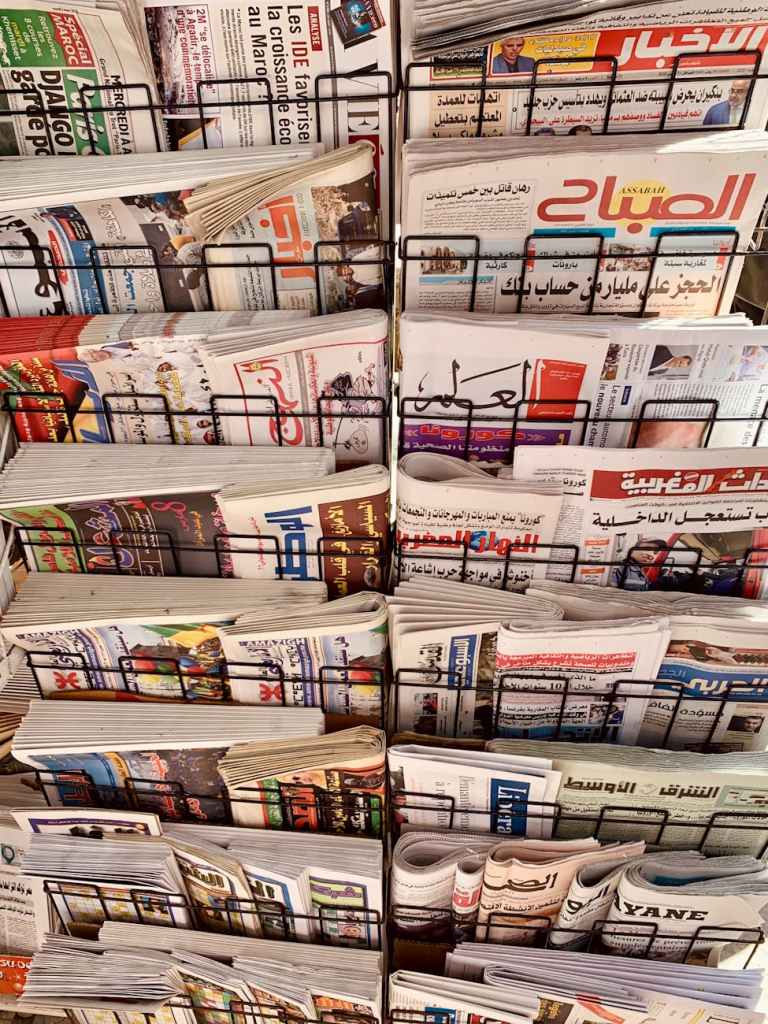
There is an argument that if you shout loud enough you will be heard. But in Israel there is also an argument that if you don’t give a damn, those voices will not be heard. The press in Israel is very slanted and the voices that are heard are those that shout loudly for the extermination of those who cannot defend themselves. It was the same story in Nazi Germany, Rwanda and Cambodia, which alienated, repressed and then terrifyingly murdered those that were shouting in silence.
The shutting down of the Al Jazeera offices in West Bank, has closed down the last voice of the Palestinians. Al Jazeera has shown the nastiness of the Israeli occupation and reported on the events that were very much part of Palestinian history, folklore and lives under occupation. Though Israel has demonstrated its ruthlessness, there is a realisation that stories, events and moments in time will be continually covered by those with cell phones. The idea today that news cannot be broadcast and minorities or in this case majorities in their home country are not without voices -is a fallacy.
What Israel has done is shut down the analysis that at times has helped the world understand the contentiousness of the arguments that have emanated across the West Bank. But worse than losing the analysis is that it has lost the intelligence war, not the actual physical intelligence, but the intellectual voices who have come onto the station and argued one way or another. Israel could argue that this is propaganda, but the reality is that these voices are necessary to understand a conflict that has been challenged by a propaganda machine that make the language of occupation a de-facto given.
Democratically, the Palestinians outnumber the Israelis in the occupied territories, democratically the Palestinian Legislator controls the towns, villages and cities according to the Oslo Agreement, which Israel signed up to, so the decision of whether Al Jazeera films, produces reports or journalistically tells the stories emanating from the West Bank is of course a decision that should be taken in Ramallah and not in the Knesset.
But the Red Lines that decide the treaties have not really been part of the Israeli remit. The idea that the Philedelphi Corridor in Gaza was just a tract of land that could be taken from the Palestinians, ignores the fact that it was a key component of the Camp David agreement that enabled Israel to find peace with its neighbour Egypt. There has been silence on the legality of Israel’s movement into the corridor from international signatories to the Camp David agreement to date.
Arguments of Israel’s behaviour have been loud in America and Europe except for the politicians who fear the backlash that comes with the arguments of Israel’s behaviour. The politicians cower under the pressure of Jewish lobby groups, however the reality is something different and the alienation of Palestinians from their homes, is also an alienation of the Jews in America, Europe and elsewhere from a narrative that is essentially going to change in the future.
I was once told that history is circular and stories of the past comeback and haunt those living in the future. The idea that Israel will be around for a hundred years challenges the historian who is looking at the past to understand the ideas and foundations of a civilisation. The concept that America will not change direction is already being felt by the protests by college kids and Arab Americans who are making their voices heard for the first time. The idea that these voices will not be heard in the future makes it very difficult for the American Jews to negotiate a future without the voices of American Arabs, American Palestinians or just those who do not agree with America’s policies in the Middle East.
The anger from some circles about the Israeli occupation of the West Bank is becoming a political reality for the state of Israel. The last pro-Israeli president is being negated by the arguments of Prime Minister Netanyahu, who is looking for a Trump presidency to rescue his leadership. It is a last ditch argument that is looking shakier by the day, and the unpredictability of that presidency maybe an argument that Israel does not want or need.
The idea that Israel will be all powerful with the weapons in its arsenal is also a fallacy as the arguments in the future will be about living in zones that are liable to be damaged by rocket fire coming from outside forces not just Lebanon but also other countries in the Middle East. The escalation of arguments will not change, but the realisation that the area is fragmented by proxies, plays into the hands of those who challenge the Israeli state.
The Middle East is not settled and the arguments themselves among the member states are put to one side and held as collateral for another day. The Abraham Accord is holding, but for how much longer is the question. There has been an acceptance that the Palestinians are a minority by the members of the Abraham’s accord, but the argument of Eretz Israel is still a significant argument that has not gained acceptance from a majority of these states.
If Israel is going to find solace in the Middle East, then it has to step carefully, the arguments that have driven Israel today are slowly ebbing away, especially in Lebanon. A small state that is polarised by its demographic make-up, is also a state that is slowly coming out of the debt trap that it set itself. But a war in the region would alienate Israel from the markets that to this day have been part of the Israeli states regional stability.
Hezbollah is not liked by the Lebanese and is seen as a powerful force that the state cannot do anything about. So if Israel targets the main structures of power in Lebanon, they are also attacking the states that were signatory to the Abraham Accord as they are the investors in Lebanon’s economy, which has been getting onto a better footing over that past year. If Israel targets the infrastructure of Hezbollah, they are also destabilising the state to such a degree that it may upset the governance of the Lebanese state. Whether Israel is purposefully going to destabilise Lebanon is also a question of whether the state will once again fight to defend the arguments of Hezbollah.
But it is very much the analysis by news organisations such as Al Jazeera, Arabiya, Middle East Eye, Haaretz and L’Orient which will decide how the wars will be interpreted in the Middle East. These outlets are voices that set the language for the future of the Middle East and if these voices are shut down there will be a realisation that the Middle East is moving towards the same arguments of censorship. But the thriving voices in the media in the Middle East are being controlled except for the Palestinian question, and the states are watching how their populations will react to the events coming from Gaza, the West Bank and Lebanon. The idea that voices can be shut off will in time be a question for the historians who will write the history of the region with the help of a vibrant media that catalogues the stories, voices and histories of the people involved.


 Current Affairs
Leave a comment