
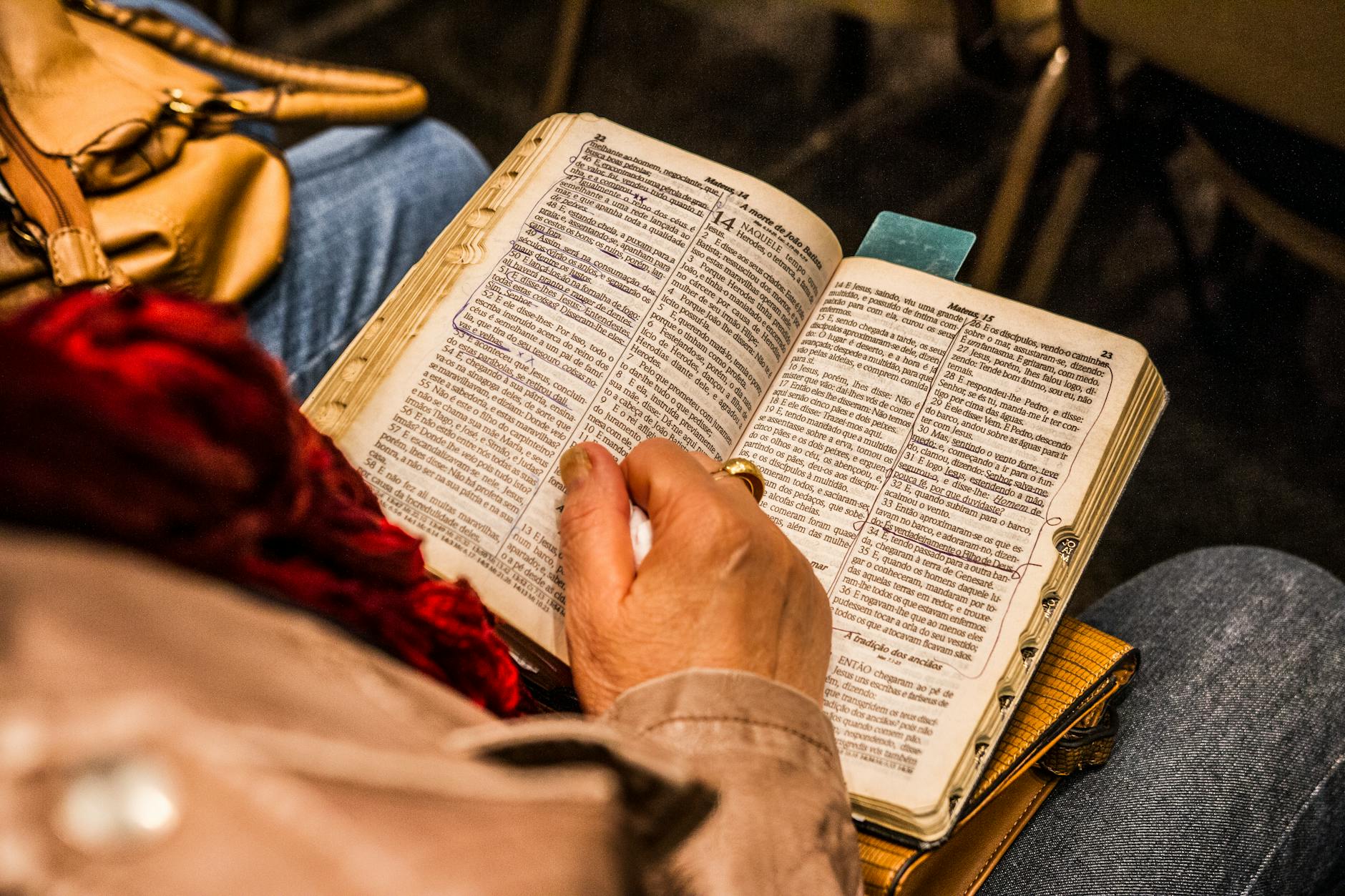
It is just about the only time that arguments are defined biblically, but the start of extended wars has encapsulated not just Netanyahu but also Putin. The war in Gaza is one of biblical proportions according to the hard line cabinet that Netanyahu has gathered as a government. In many ways Putin has argued that the war in Ukraine is a holy war that is not just about de-nazifying the Ukrainians, but also about bringing god back to the foresaken who have been corrupted by Western decadence. So where do these leaders feel their argument can be biblically and morally found, and in what way should they dial down their attacks on the Western governments, the Ukrainians, the Arabs, Persians and Palestinians.
Netanyahu and his cabinet after the 7th October attack on Israel, were defiant with anger and stated that Palestinians would not get aid, electricity, water and food. Netanyahu, the prime minister of an extreme cabinet recanted a biblical text, Smite Amalek, a commandment, which translated as an explicit order from God to destroy the enemies of the Israelites. The commandment ordered Saul to smite Amalek, and kill infants, women, men and their animals without sparing anyone. Though Saul carried out the order, he received the wrath of god for sparing the Amalek king,(1 Samuel 15:3). The commandments of God continue throughout the old testament, Esther, the Persian, Babylonians etc. Smite Amalek has meaning for the Israelis and at the forefront of their thinking. The tactical and political thinking of the Israeli war cabinet has led to a hard line policy that has included bombing infrastructure and missile attacks on civilian centres.
There have been over 33,000 Palestinians killed in Gaza, of that number12,500 children killed. Seventy percent of Gaza has been flattened and seventy thousand casualties have been recorded. There is mass hunger and in some cases there have been deaths from starvation. Hospitals have been targeted and those inside the hospitals have been left to die. Mass graves have been found in northern Gaza and bulldozers have been used to clear homes once lived in by Palestinians. Israel’s argument is that the Palestinians committed atrocities on the 7th October and are holding hostages. But the inability of both Israel and Hamas to come together and negotiate is compounding the problems faced by both the Israeli’s and the Palestinians. Egypt and Qatar have tried to bring the two sides together to negotiate the release of the hostages and end the conflict, but the war seems intractable.
Outside the conflict in Gaza is a regional war between Israel and Iran, a type of proxy war, where Iran’s shadowy regional forces have fought a campaign on Israel’s northern border. After the assassination of Mohammad Reza Zahedi, a top commander in the Iranian Revolutionary Guards Corps there was an escalation in the proxy war with Iran sending drones and fired missiles from its own territory at Israel. Though Israel defended itself with the help of a multinational force, there was a question of whether there would be a war between Israel and Iran. Though Israel and Iran were close to a conflict, the biblical argument that was argued on the the political fringes was for a war, which did not materialise.
Vladimir Putin’s argument is that the West is decadent, and contends that the second world war was won by the Great Patriots of Russia,(the Patriotic War). Putin argues that the decadence of the West is a signifier that the Russians of today are fighting a Nazi elite that are corrupting Russia. In the West Putin is compared in the media to Adolf Hitler, and the behaviour of the Russian army to the Nazi’s in the second world war. There is also a constant comparison between the West’s political efforts to stop Russia’s invasion of Ukraine and the inability of Chamberlain to get a peace agreement with Hitler in 1938. In much the same way as politicians such as Macron confronted Putin and questioned whether Russia was going to invade Ukraine. The West has moved slowly to understand the conclusion of Putin’s rants, beliefs and actions and are faced by a more aggressive ideology from Russia.
The Ukrainians have distanced themselves from the Russian Orthodox church and moved their allegiance to the Constantinople Church instead of Moscow. Ukraine borders Eastern and Western Christianity, and though under the authority of Moscow for the past five hundred years, the Ukrainians have moved towards an independent church firmly cemented in an independent Ukrainian state. This may be one of Putin’s arguments in his description of the war in Ukraine as a holy war, which also may be influenced by Dugin, Putin’s historical and philosophical adviser. Dugin’s 1997 book, The Foundations of Geopolitics: The Geopolitical Future of Russia, addresses the instability of Ukraine as a component of Russia’s growth towards a transcontinental power, which not only encompasses the Ukrainian state but also its culture and heritage.
According to Putin’s thesis, the holy war that Russia is fighting is for a re-imaging of the lands that were once part of Russia. Putin’s failure to understand that the Ukrainians would fight, challenged the outcome of his thesis. Shortly after the defeat of the Russian army outside Kiev, Putin argued that Russia was trying to contain Nazis, which was met with derision from the Ukrainians who had found the slaughtered, raped and tortured in Bucha. The war became politically and strategically important among Western politicians. It also became a moral argument that has been supported by Western media who view the war as important to the security and stability of Western nations. Though the war has not been affixed with religious iconography it is seen as a moral argument. The ambiguity of the moral argument is a consideration of the Ukrainians and the Russians, but Helene Richard writing in Le Monde Diplomatique, argues that it is not really as contentious as it seems, but Russia she argues, wants a buffer zone against Europe and NATO’s expansion in the East, which is very much part of Russia’s geopolitical argument.
Putin has argued against the corruption of Western powers, especially arguments such as LGBT rights, which he believes is corrupting the Russian space. In this sense, Putin argues that the conversation is about keeping Western arguments in place rather than corrupting the Russian Federation, but this itself was at the forefront of his electoral campaign, the dominance of the Russian family over Western families and as such the tenets that Putin has put in place are faith, religious observance, the family and governance. Though Putin himself does not hold onto any of these tenets as sacrosanct.
Ideologically the argument of god is as much a moral argument as that of identity. Netanyahu, has certainly used the military for a purpose that has wiped out thousands of lives, killed children and forced through a policy of neglect as part of his war with Hamas. There are thousands dying not just from war wounds but also neglect, which has caused disease, sickness and starvation as a core method to the way that Israel is fighting this war. With the same savagery as the Israeli’s, the Russian’s have been fought to a standstill, the Ukrainians thirst for independence has also created an identity that is closer to the West than the East. The theocratic arguments of both the Russian’s and the Israelis challenges the philosophical and moral ambiguity of their arguments. In many ways the idea that God is a player in these wars challenges the theocratic argument of whether there is a god given right to manage an outcome with so much savagery. But it is also a question of the moral outcome that challenges these leaders, and ultimately there will be a day that challenges the value of these outcomes and whether these wars meet their objectives.
 Current Affairs
Leave a comment