
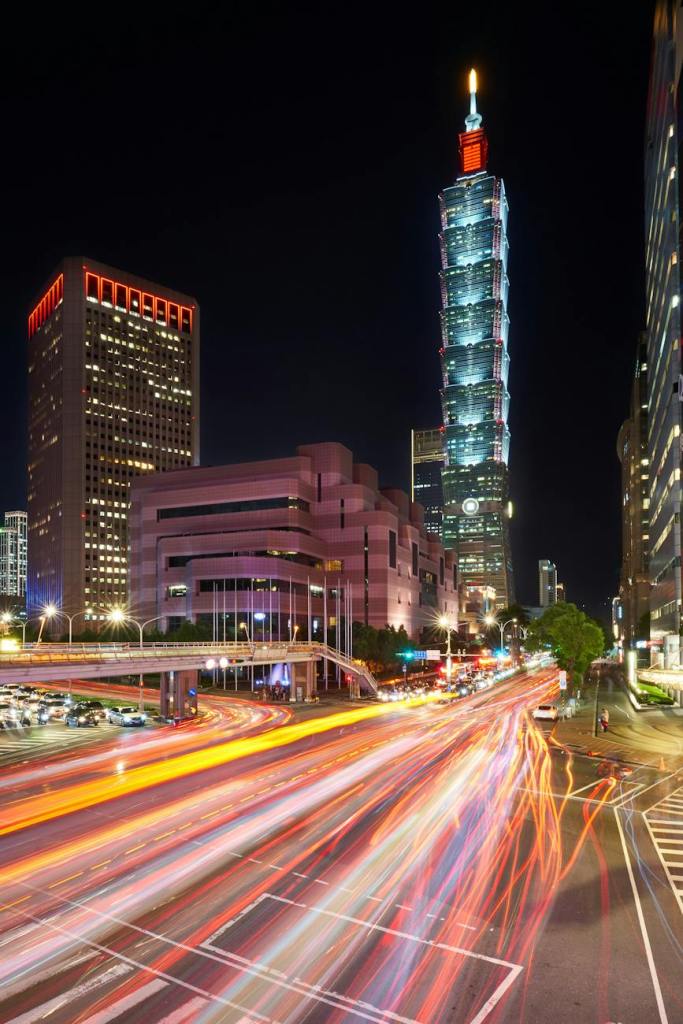
The 1984 Sino – British agreement that Britain and China had over the status of Hong Kong, and the agreement that there would be one nation and two systems, has galvanised the elections in Taiwan. Furthermore, the questions concerning identity and independence is also being reflected by the war in Ukraine, and the difficulties that Ukraine has found in defending the principles of it own independence, has also fed into the elections in Taiwan.
But Beijing’s claims on Taiwan and its threat to annex the country by force have made clear that the official Republic of China name, the flag and the constitution would cross its red lines. China argues that the edition of Taiwanese culture would be denounced and that Taiwanese textbooks in schools and universities would be cleared of “desinicisation”, which they claim has been a campaign by the DPP for a separatist identity.
Taiwan is particularly sensitive to the events that have taken place in Hong Kong, the idea of one nation and two systems was rejected by the Taiwanese when Deng Xiaoping offered it as a compromise after the Sino-British agreement in the 1980’s. The 2020, National Security law passed by Beijing for Hong Kong, has severely affected the civil liberties and political rights of the Hong Kong citizen , and to a degree has also become a sensitive argument about whether to improve the relationship between the Taiwanese and the Chinese government – with the current CCP leadership.
The United Kingdom government has argued that China is currently in breach of the 1984 Sino-British joint declaration, they argue that Beijing pledged that Hong Kong would receive “a high degree of autonomy” once returned to China. Taipei has watched how Beijing ignored that promise and violated the “one country, two systems” framework, which has made the Taiwanese nervous about what an agreement with China would look like and whether China could underwrite any agreements that they would honour- if there was to be unification.
The United States and other nations have urged the Taiwanese to take their defence of the Island more seriously, but Taiwan has had a laissez faire relationship with its military until Russia’s war with Ukraine. It has been a case of whether to spend taxes on social programmes, energy, industry, or whether Taiwan will be a responsible player on green issues. Recently, Taiwan has increased spending on it’s military as Russia has demonstrated that authoritarian leaders will use force for their own territorial ambitions.
The belligerence of the CCP leadership and the demonstrable aggressiveness of the Peoples Liberation Army close to Taiwan, is making the DPP-KMT political argument much more aggressive than usual. The KMT is accusing the DPP candidate Lai Ching-te of risking war with China, while Lai Ching-te is arguing that Hou Yu-ih is seeking a compromise that would endanger Taiwan’s security and sovereignty.
The Taiwanese government on the 11th January called out China and claimed that it was interfering with the elections and that it had sided with the KMT. Tsai Ing-wen the incumbent president, has tried to keep the balance by rallying the nation behind its identity, praising the ROC’s history and the economic miracle, democracy and tolerant political and social culture defining the states identity.
All three candidates in the election have agreed that Taiwan must strengthen its relationship with US, Japan and other democracies. In 2022 Washington and Tapei launched an agreement on trade and security cooperation. Taipei’s ties to European democracies has opened up and a number of European officials have visited Taiwan. Taipei and Japan have bi-lateral agreements, which have helped Taipei absorb the economic sanctions placed on it by China and supplied the Taiwanese with the ability to weather the sanctions. All candidates agree that the future for Taiwan is that the economy needs to join the CPTPP, which is the trade alliance between Japan and countries in the pacific.
China’s claim on Taiwan is based on a historical perspective that China has been an integral element of Taiwanese identity. It argues the the Qing dynasty was a ruler but rebels from the Qing dynasty had found refuge in Taiwan. However, there has been an indigenous argument that Taiwan was never part of China and that the country was ruled primarily by the Dutch who colonised it, then pirates and finally the Japanese who became the first colonial power to rule over the whole of Taiwan. The Japanese built railways and in their fifty year rule left Taiwan with a state school system, universities, hospitals and a legal system modelled on Japan’s. So Taiwanese identity is a multi-layered argument of who and what the Taiwanese identified with until the KMT took the islands with an agreement from the allies after the second world war.
The liberalism of Taiwan is relatively new and the military government did not give away its position as the dominant culture until 1975, when there was a thawing of its relationship with the islanders, who accused it of slaughter and persecution of local elites known as “the 228 incident,” after 1947. So the relationship between the Chinese and Taiwanese is not necessarily cemented and when Xi Jinping argues that there is an “historical inevitability” that Taiwan will return to Chinese rule, there are a lot of voices, especially in the DPP that argue that a KMT government would weaken and endanger Taiwan’s sovereignty and security.
Taiwan is a complexed state that has had many reincarnations and identities, but the overall argument is whether these elections are central to the identity of the Taiwanese. There are two competing arguments of Taiwanese identity and one of these is Chinese. Though the Taiwanese are independent, they live in fear of arguments coming from the other side of the straits of Taiwan and how they will be identified in the future. China has set out its store, but Taiwan itself has not, though there is an openness to negotiate with China, Taiwanese identity is slowly being cemented towards an indigenous argument. China argues that the indigenous argument is secondary and that Taiwan is part of the mainland, but the dominance of the KMT has come to an end and Taiwan is developing and has developed its own identity since the KMT were last in power. It is argued that the electoral cycle has come to a natural conclusion and that the DPP will lose this election, but the KMT do not necessarily have the answers that will prove central to the Taiwanese and their identity. This election is about Taiwan’s relationship with China and if the DPP win the election the sovereign argument of China becomes more acute, because the identity of the Taiwanese will be at the forefront of the national debate in the future especially after the debacle of the agreement between the United Kingdom and China about Hong Kong.
 Current Affairs
Leave a comment