
There has been much hype of Russia’s move into Africa, but the reality is that African nations mainly rely on Western and Chinese trade and investments. Countries such as Mali and Burkina Faso need Russian weapons, but the rest of the country requires aid and rational arguments put forward to find agreement when neither side is willing to hear the others argument. With the withdrawal of western nations from insurgent rich areas, the national armies are struggling to fill the gap left by western military forces and the United Nations, to fight an effective counter insurgency. This is evident when the Malian forces lost two bases in Lere, northern Mali.
French president Macron argued that the war in Mali was about development and providing the citizens of Mali with a positive route toward that development. The problem has been that the population has been growing at between 3 and 5% in an area that has been affected by climate change. The poverty in the area is acute and it is the failure of successive governments to develop resources and share the countries wealth with the impoverished north that has led to different groups exploiting the young.
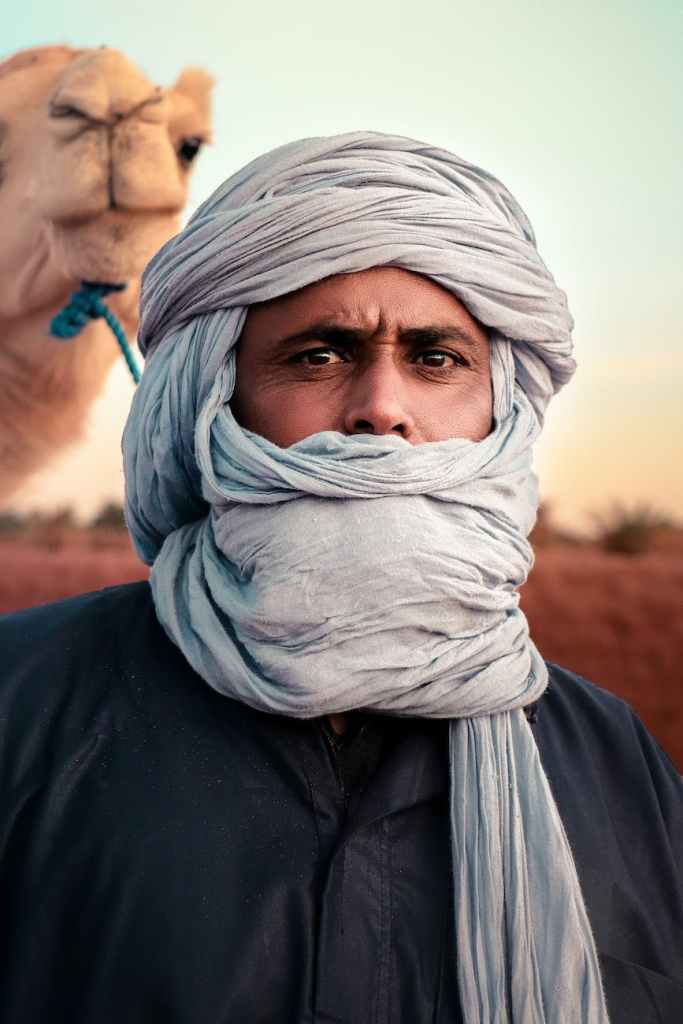
To a large extent Mali is dependent on agriculture, with a rural population that is dependent on subsistence agriculture, but there are other resources such as minerals which make up 20.9% of government revenue and accounts for 65.5% of exports. But there is so much more to be exploited but can’t due to poor infrastructure and conflict, especially in the north where gas and oil has been known to be for some time. The Tuareg, an indigenous group in northern Mali have been arguing that the poverty and insurgency in the north has been caused by the south’s inability to share resources.
At a council meeting in 2023, the Tuareg argued that the insurgents should unite in the hope of declaring a new country known as Azawad, which would be a Tuareg homeland. This is nothing new, the 2012 uprising, which forced the west to confront the rebellion was partly determined by the same argument for an independent northern state. The belief that Azawad could be an independent state is largely built on the argument of exploitation of mineral resources with huge gas and oil deposits found. Though there is limited exploitation, the insurgency in the north has caused enough chaos for the exploitation of these resources to be difficult.
The Taoudeni basin spanning from the northern border with Algeria to the Mauritarian border is one of the largest basins in Africa. Geologists in the 1970s discovered that the area was rich in gold, phosphate, natural gas, petroleum and water. It is the largest sedentary basin in Africa. This is the area that the Tuareg would like to integrate into a nation called Azawad, but government forces and to a degree its western allies secured the area until withdrawing. The uncertainty of the government in how to manage the resources of the north has led to very little exploitation of the area and due to poverty and a growing birthrate the high number of unemployed turning to insurgency has compounded the crisis into open civil war.
There is of course the question of uncertainty in the military junta who rebelled against the democratic government and took power. But the same arguments remain and the failure of successive governments to exploit resources has led to an impasse, where the military are too weak in the north to bring security and have been challenged in the middle of the country for the same reason. Working with Wagner the military have committed atrocities, which to a degree has stopped some of the insurgency in the centre of the country, but insurgencies keep exploding into the open, whether in the north, middle or south.
A lot of the insurgency dates back to 2012, when Ghadaffi fell in Libya, the National Movement for the Liberation of Azawad captured munitions and returned to northern Mali. The exploitation of Toudani has led to some analysts arguing that continued Saharan instability is key to the exploitation of resources. In 2012, Hama Ag Mohammed argued that the West’s only interest in Mali was the exploitation of resources, he argued that “France went ahead to obligate Mali to sign a defence agreement and thereafter grant mineral concessions.”
But the main argument is for security and with the withdrawal of the UN and Western countries the security of the state is failing, even with the help of Wagner. The ability of the military government to fight the civil war has become questionable with the death of Prigozhin in Russia. His force of mercenaries have lost their leadership and there are questions whether the bulk of the mercenaries will be committed to continue fighting the insurrection. Mali is without the Western military, AFRICOM and UN, which to a degree focussed the forces against the government and it is now a question of whether the military will be able to continue the war in the present.
There have been mistakes in the west concerning Africa, but there has been non more egregious than Catherine Bestmann who argued that with AFRICOM’s participation that, “the United States will have a stronger voice in shaping domestic laws and policies regarding terrorism and resource extraction in African states,” (2008). This statement left a bitter after taste in most African minds, especially in north Africa, the question has to be whether the current crisis will draw the West back into Mali if the Wagner mercenaries are forced to fight beyond their capabilities. The Russian state has argued that it will continue to support the Sahal, but rudderless mercenaries do not commit to the forces when challenged by a serious uprising.
Can the Malian army take on the insurgents is yet to be answered, but the question really is about the development of resources, to develop the resources necessary to build a state that has been fractured by an insurgency. There are so many questions about whether Wagner will continue to exist into the foreseeable future that challenges whether the Sahel will sink further into open war. At the moment there is an impasse, but the Tuareg have opened the fractures that were always evident in Mali, but whether the insurrection will succeed this time is dependent on whether the military government has the resources to counter this insurrection.
 Current Affairs
Leave a comment