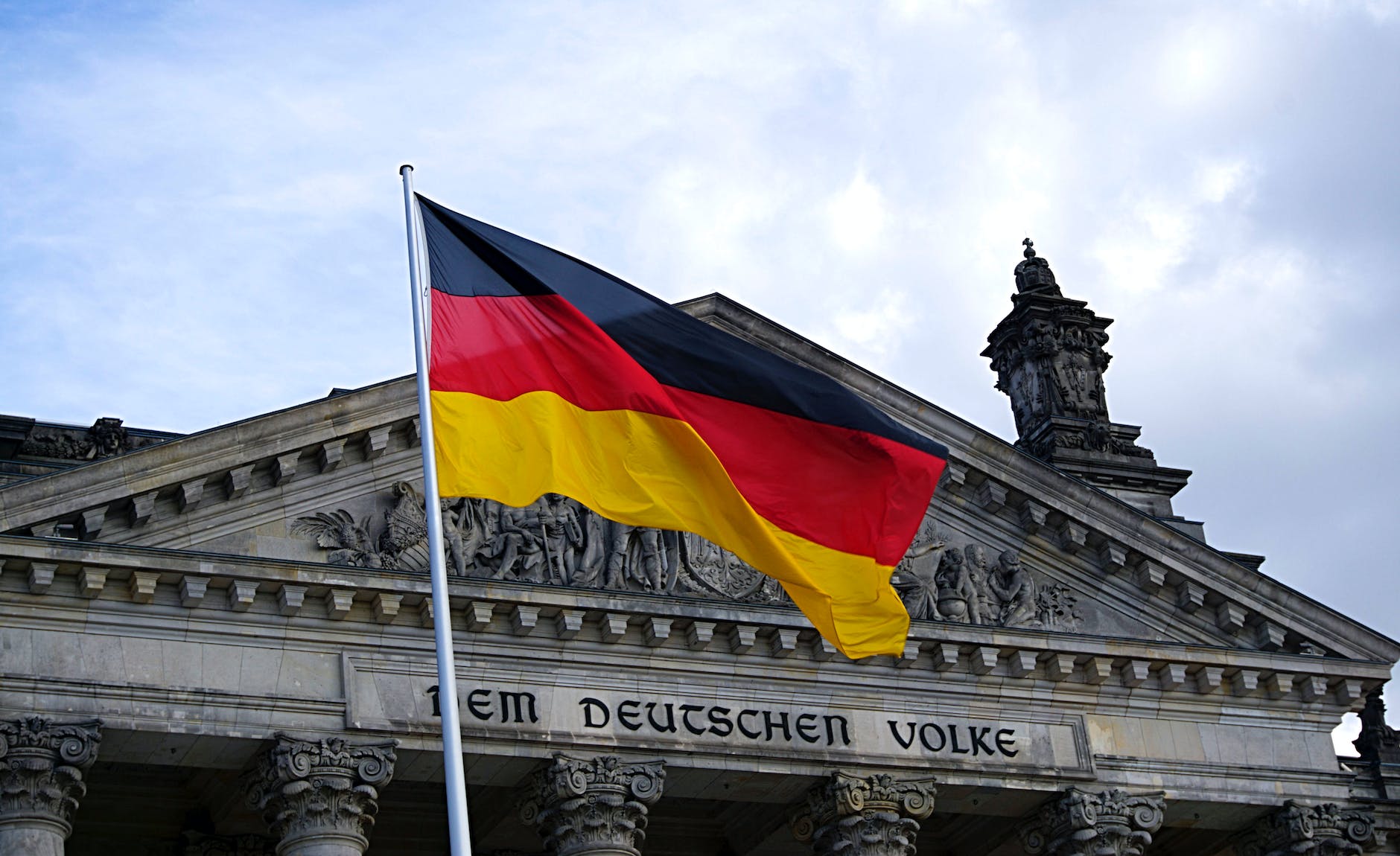
Germany’s chancellor Olaf Scholz argues that to avoid a new cold war in a multi-polar era, will be dependent on a policy of rebuilding Germany’s armed forces and taking a multilateral approach towards the world. But the resounding argument is determined by resources fed into concerns of whether Germany can take a lead in Europe, and whether that lead is determined by resources funnelled into geo-political arguments, especially after Germany’s assertions have been fragmented by its beliefs, which has led it to being a passive player when the West was shaped by the cold war.
The word Zeitenwende, means the end of an era, meaning a new beginning, which ties into the argument that Germany needs to be more pro-active as a power. How it will be more pro-active is dependent on how you see the arguments that are encompassing the geo-political fragmentation of the world, as Chancellor Scholz puts it. But is this a simple argument of East and West, Chancellor Olaf Schultz argues a world argument, a concentration of resources on new and developing markets, but most of all a pro-active approach towards the conflict in Ukraine. He argues that Germany is trying to uphold an international order based on the principles of the UN charter, arguing that democracy, security and prosperity depends on binding “power to common rules.”
But Germany is not demanding a larger voice, but a voice within Europe, a voice that is a guarantor of European security, but mostly he views Germany as an “advocate for multilateral solutions to global problems.” What this actually means is that Olaf Scholz believes that a European diplomatic approach is preferable to one that encompasses arguments of impasse. It is an approach dependent on a bi-lateral approach between Europe and NATO as a whole, and this in itself empowers the way that Germany is going to approach its membership of the North Atlantic Treaty through spending more on defence and updating Germany’s military architecture.
Judy Dempsey of Carnegie argues that Germany is beset by indecisiveness, timidity and bureaucracy and it is struggling to move on from the appeasement, that to a certain degree empowered Putin to attack Ukraine. But the reality is that Germany has not spent enough updating its military architecture over the years and is struggling with supply issues that means it cannot grasp this Zeitenwelde, or new beginning fast enough for it to become a decisive player in the European theatre or anywhere else for the time being.
But is it the same argument as always, that to appease Russia is also to enrich the economies of Europe, in other words there is no peace without trade. Europe to a degree is holding strongly onto the two tier approach, sanctions against Russia and providing weapons to Ukraine, but is this tactic faltering as the winter bites deeply into the economies of Europe, through the expense of supplying weapons and sanctioning Russia?
The other large voice in Europe is France and President Macron’s relationship with Putin, seems to be better than anyone else’s in Europe for Russia, Macron is able to pick up the telephone and have his calls answered by Putin. The relationship seems to be strategically significant, as France’s credentials to open doors in Russia stems from ideologies lost in the time of the cold war when France was independent of NATO and ideologies determined by intransigence. But as a whole, the argument is whether Europe can continue its support, or whether they are looking to find an exit strategy and whether they will force the Ukrainians to ceede territory.
At the Berlin security conference, Olaf Scholz argued that “we can comeback to a peace order that worked and make it safe again, if there is a willingness in Russia to go back to this peace order.” But there is still the question whether Germany has a crucial role to play in Ukraine, especially after the Ukrainians complained about Berlin’s inability to make quick decisions. The Zeitenwelde, Scholz argues has resulted in Germany’s change in policy to overhaul defence spending and to begin providing weapons to Ukraine. One of the concerns of Germany was, “which threats we and our allies must confront in Europe, […] potential assaults on allied territory, cyber-warfare, and even the remote chance of a nuclear attack, which Putin has not so subtly threatened.”
The German Economic Institute, (a think tank), believes that Germany will not be able to reach 2 percent of GDP on defence spending, and will not reach the 2 percent until 2026, according to Rheinische Post. And as always, America is telling the Europeans that they have to find a way to develop their defensive architecture to strengthen NATO and Europe as a whole. Sholz argued that Putin’s war had backfired and that it had resulted in the European Union bringing Ukraine and Moldova’s candidacy to join the EU forward, and with the old NATO mantra that an attack on one member, was an attack on all the members of NATO.
But Olaf Scholz argues that Zeitenwende goes beyond the war in Ukraine and beyond the issue of European security, which challenges exactly what position Germany sees itself fulfilling. Questions of ideology are morphed into structures determined by identity, and the realisation of what Germany’s past once was are highlighted to explain why and how the country is carefully moving towards being a full participant in the world after seventy years of passivity. But it is the question of Russia that is most vexing for the Chancellory, it is a question of failure to integrate Russia into the way the West is thinking, Scholz argued that after the fall of Communism that “Russia would become a partner with the West, rather than the adversary that the Soviet Union had been.” In this sense, the argument was why should Germany keep a defence force of 500,000, when all the “neighbours appeared to be friends or partners.”
But it is the question of Russia that has been central to the way that German’s are moving to re-arm, Scholz calls Russian aggression imperialistic in context. In 2007 at the Munich security conference, Putin moved towards an aggressive approach that challenged the rules-based international order, in 2008 Russia invaded Georgia, in 2014 annexed Crimea and sent forces into the Dombas, which in Scholz’s own words was a direct violation of International law. Scholz points out that since 2014, Russia has “undercut arms control treaties […] expanded military capabilities, poison[ed] and murder[ed] Russian dissidents, crack[ed] down on civil society and carried out a brutal military intervention in support of Assad in Syria.” Scholz goes on to argue that Putin has defied even the most basic principles of International law.
Does this mean that Germany is going to be more pro-active, Caroline de Gruyter writing for NRC Handlesblad, argues that Germany and France are moving in the same direction and that Russian aggression has strengthened the resolve, which underpins European unity and “Germany [see’s itself as…] a strong anchor in Europe. For Europeans she see’s it as a moral issue compounded by the violence and barbarity of Russia’s invasion of Ukraine.
But is Europe unified, Macron keeps looking for a means to confuse how Russia is going to be confronted. On the one hand France supplies weapons to Ukraine and on the other France is looking to find a negotiated settlement. In Bali Macron suggested a role for Xi Jinping alongside France in securing a negotiated settlement with Russia, and in Macron’s visit to the United States, he argued that there should be guarantees made to the Russians.
But in many ways the Zeitwende speech by Olaf Scholz puts to bed the fantasy of Macron, Scholz argues that “The world must not let Putin get his way; Russia’s revanchist imperialism must be stopped. […and that…] Germany’s new role will require a new strategic culture.” Further on in the speech, he argued that “In my exchanges with Volodymyr Zelensky, I have made one thing very clear: Germany will sustain its efforts to support Ukraine for as long as necessary.”
Germany, with partners is moving very slowly to become a major force, after seventy years of passivity it is moving slowly and carefully, but it is moving towards rebuilding a military that once fought in two world wars, so Germany can counter the aggressiveness of Putin. In essence, Germany is taking the position that Britain once held and leading the European Union militarily. Germany should by 2026 become a more significant partner in NATO, than it has been in its history. Zeitenwelde means a new beginning rather than change and that beginning is being taken through an understanding that the war in Ukraine has led to a realisation within Germany’s political elite that Russia’s imperialism must lead to Germany having a voice on the world stage that is not just determined by commercial concerns.
 Current Affairs
Leave a comment